- Miso type
- 八丁味噌
Hatcho-miso
Only soybeans, two years and three tons of stone.
Flavor profile
The strengths are editorial judgments on a scale within the family, not measurements. They can be compared across the miso varieties, not directly against another family.
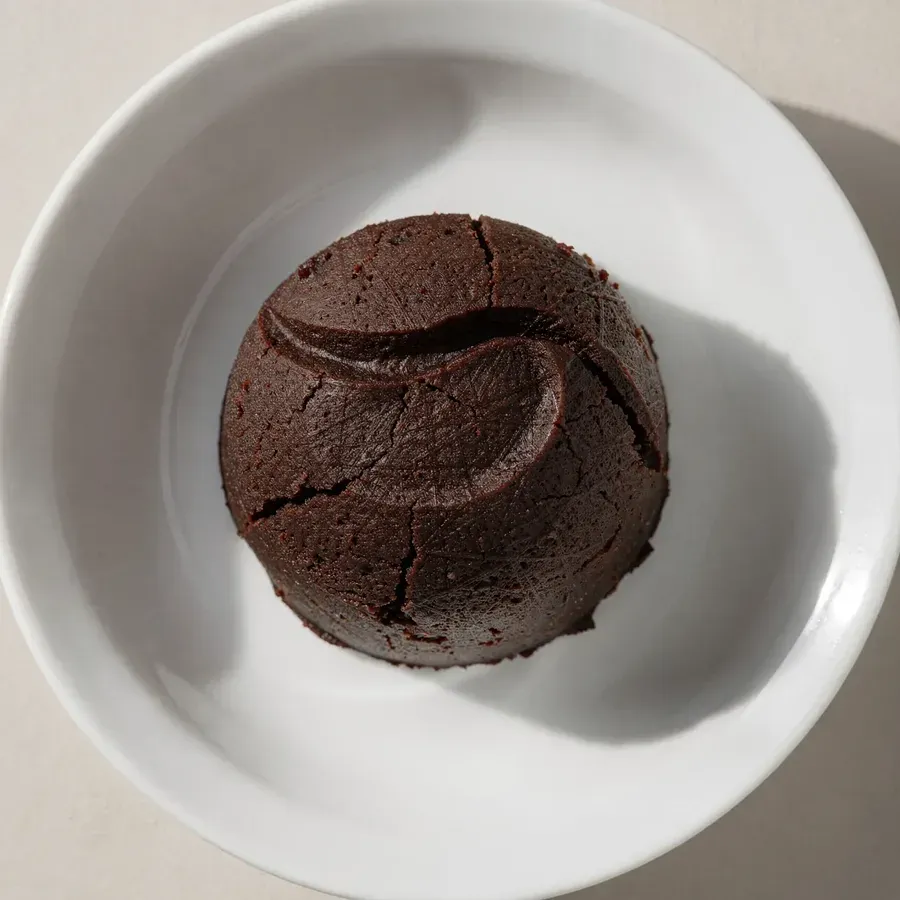
Hatcho is miso without grain. The koji is grown directly on steamed soybeans shaped into balls, and the paste then matures in cedar vats under several tons of river stone for at least two years. The result is nearly black, dry and so dense it barely stirs out: dark umami with an astringent, almost bitter edge and hardly any sweetness at all, since there is no rice to turn into sugar. It is the most extreme miso in the family, and the only one that is the subject of a legal dispute.
Sensory analysis
Pyramid and character
Aroma
from the tub
- dark chocolate
- fermented soy
- dried fruit
Taste
on the tongue
- dense umami
- astringency
- dry saltiness
Finish
what lingers
- very long
- bitter edge
- dry
Character 0-100 per axis, set relative to the other entries in the same family. An editorial judgment of a typical serving, not measurements.
Background
Facts
- Koji
- mame-koji, meaning koji grown directly on soybeans; no rice and no barley
- Origin
- the block eight cho (about 900 meters) west of Okazaki castle in Aichi, by the Yahagi River
- Producers
- two houses with centuries behind them, Maruya and Kakukyu
- Fermentation
- at least two years in cedar vats under about three tons of stacked river stone
- Color
- very dark reddish brown to nearly black
- Pairs with
- miso nikomi udon, dengaku, long braises and stews that can take a powerful tone
In the kitchen
Use
- Amount
- start with a third of what you would take of a shiro
- Method
- it is too dense to stir straight in; mash it first with a little warm broth in a ladle
- Note
- more hatcho does not make it rounder, only more astringent; blend it with a light miso instead, which is exactly what Nagoya's kitchens do
Keep exploring
Related in the Zukan
- MisoFamily
- Aka-misoMiso type
- Shiro-misoMiso type
- KojiConcept
- UmamiConcept
Shop and journal
At Nekko
Evidence
Sources
- Okazaki, Aichi (Wikipedia), avsnittet om Hatchō miso (retrieved 2026-08-12)
- Hatcho Miso, registrerad geografisk beteckning nr 49 (MAFF) (retrieved 2026-08-12)
- Types of Miso (Hikari Miso) (retrieved 2026-08-12)
Compiled by Basim Ali Yoshiguchi. .