- Miso type
- 麦味噌
Mugi-miso
Barley's miso: bready, sweet and rustic.
Flavor profile
The strengths are editorial judgments on a scale within the family, not measurements. They can be compared across the miso varieties, not directly against another family.
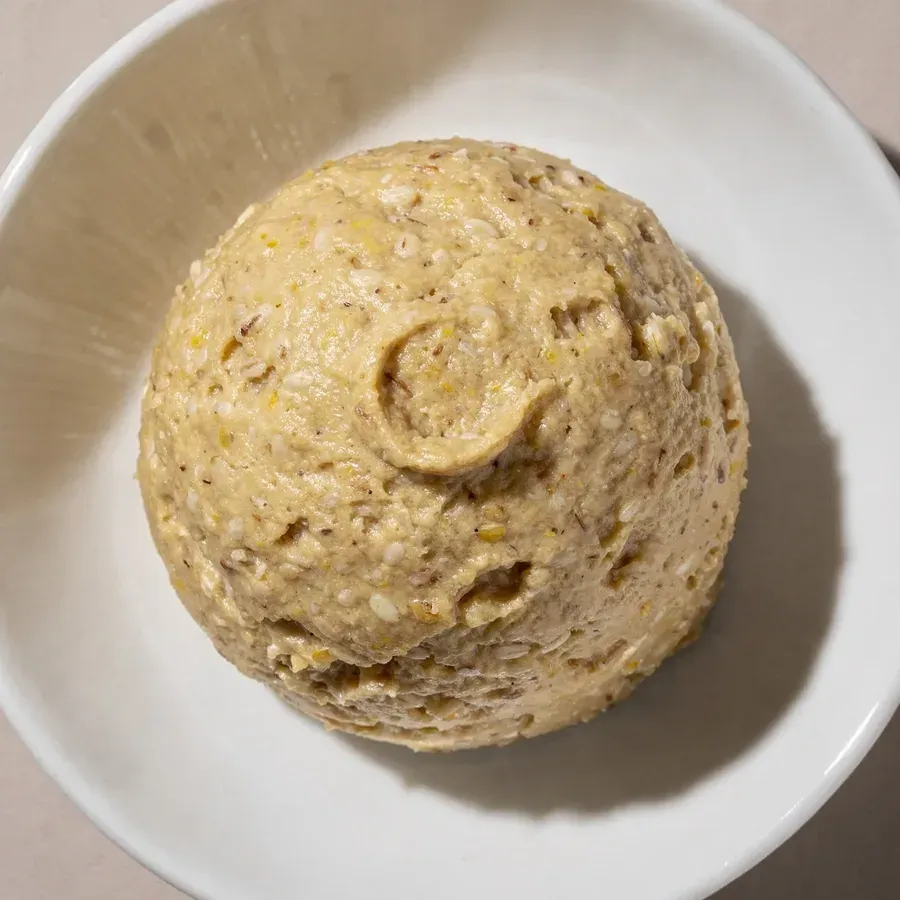
Mugi-miso is made with barley koji instead of rice koji, and the barley shows right away: the aroma leans toward fresh baked bread, the sweetness is distinct and the paste is coarser in texture with visible grains. It belongs to Japan's warm southwest, Kyushu, Shikoku and western Chugoku, where miso soup is not first and foremost something you warm yourself with. It is the most easygoing of the more robust miso types.
Sensory analysis
Pyramid and character
Aroma
from the tub
- fresh baked bread
- barley
- mild fermentation
Taste
on the tongue
- sweetness
- nuttiness
- soft saltiness
Finish
what lingers
- round
- medium length
- grain
Character 0-100 per axis, set relative to the other entries in the same family. An editorial judgment of a typical serving, not measurements.
Background
Facts
- Koji
- barley koji (mugi-koji) instead of rice koji; the soybeans are the same
- Origin
- mainly Kyushu, Shikoku and western Chugoku; a redder mugi is made in northern Kanto
- Color
- pale yellow beige to light brown, darker in the northern variant
- Fermentation
- often shorter than for dark rice koji miso, since it is made in a warm climate
- Distinction
- a coarser texture with visible bits of barley, and a bready aroma that rice koji miso lacks
- Pairs with
- miso soup with root vegetables, grilled vegetables, onigiri and as a dipping sauce for cucumber
- Warning
- barley contains gluten, unlike miso made with only rice and soybeans
In the kitchen
Use
- Amount
- about 1 tablespoon per serving of soup, like an awase
- Method
- dissolve in a ladle of warm broth and stir in last
- Note
- do not strain out the bits of barley; they give mugi its texture and half its character
Evidence
Sources
- Miso (Wikipedia) (retrieved 2026-08-12)
- Types of Miso (Hikari Miso) (retrieved 2026-08-12)
- Nekko Journal: Miso, guiden till japansk misopasta (retrieved 2026-08-12)
Compiled by Basim Ali Yoshiguchi. .