
- Soy sauce type
- 白醤油
Shiro shoyu
Salts without showing.
Flavor profile
The strengths are editorial judgments on a scale within the family, not measurements. They can be compared across the soy sauce varieties, not directly against another family.
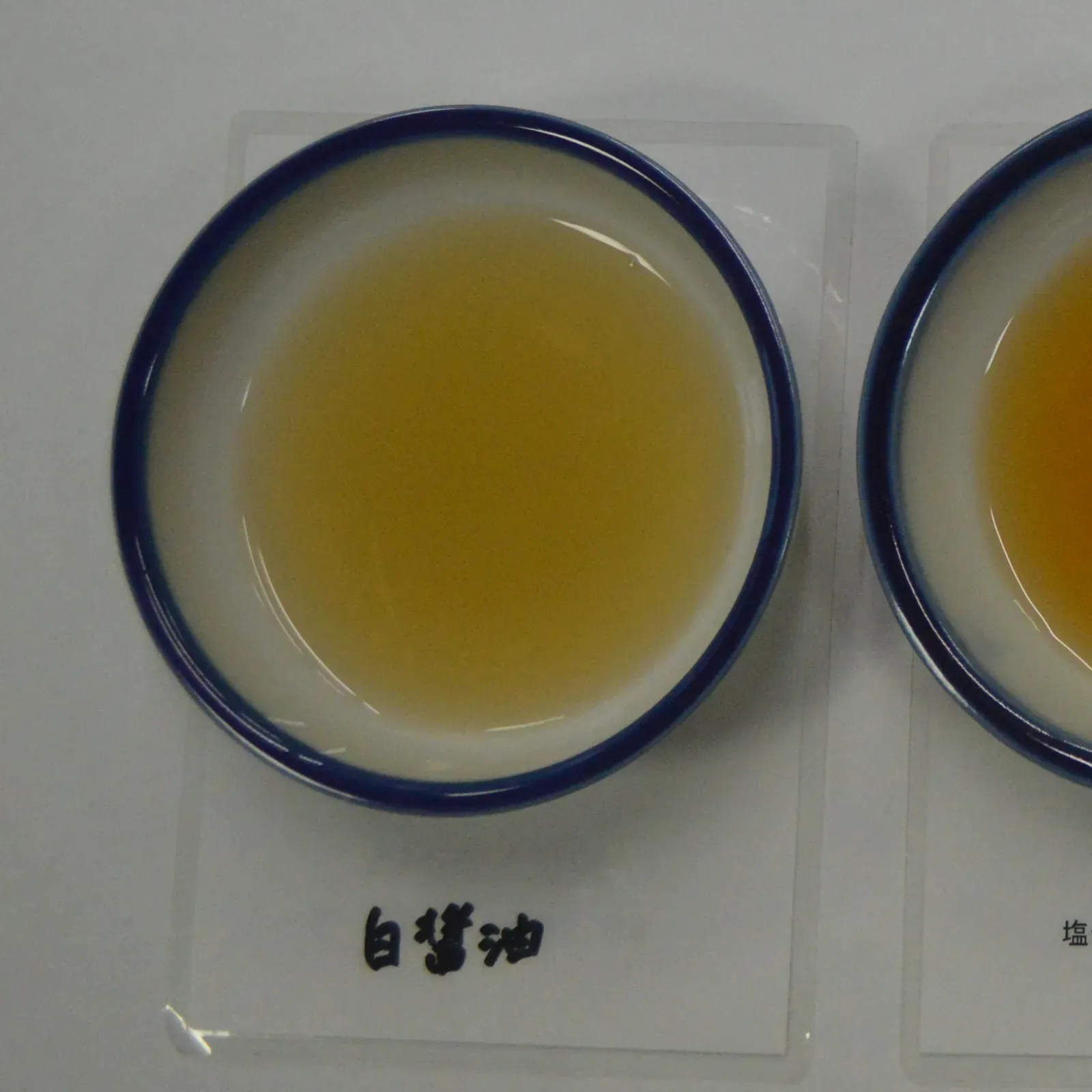
Shiro shoyu is the palest soy sauce, amber like a strong tea, and tamari's mirror image: where tamari is almost all soybeans, shiro is almost all wheat. That gives plenty of sugar, little umami, and nearly no color, and the colorlessness is the product: it salts and scents without staining a clear broth or a chawanmushi. Its home ground is Hekinan in Aichi.
Sensory analysis
Pyramid and character
Aroma
from the tub
- wheat
- sweet
- light ferment
Taste
on the tongue
- sweetness
- salinity
- light umami
Finish
what lingers
- short
- sweet
- clean
Character 0-100 per axis, set relative to the other entries in the same family. An editorial judgment of a typical serving, not measurements.
Background
Facts
- Composition
- mostly wheat and a small share of soybeans, roughly tamari's recipe backwards; the wheat's starch becomes sugar, and the sugar is the type's signature
- Color
- pale amber, and it is meant to be; the fermentation is kept short and cool, since color in soy sauce brewing follows time and heat
- Origin
- Nishi-Mikawa in Aichi, with Hekinan as the classic home town and the early 1800s as the usual dating
- Use
- wherever color must not show, in chawanmushi, clear soups, white miso soup, and pale pickles; also the professional kitchen's hidden salinity in everything meant to look unseasoned
- Storage
- the most delicate of the five; the color darkens quickly after opening, so small bottles and the fridge are the rule
- Proportion
- the smallest of the five types, under one percent of production
In the kitchen
Use
- Dosage
- like usukuchi, with the handbrake on; the salinity is high though the color whispers
- Timing
- late in the cooking, so the light aroma of the short brew survives
- Note
- a shiro that has darkened in the bottle is not spoiled, but it has lost its only head start; at that point a usukuchi does the same job cheaper
Keep exploring
Related in the Zukan
- Soy sauceFamily
- UsukuchiSoy sauce type
- TamariSoy sauce type
- Shiro-misoMiso type
Evidence
Sources
- 白醤油 (japanska Wikipedia) (retrieved 2026-08-15)
- Soy sauce (Wikipedia) (retrieved 2026-08-15)
Compiled by Basim Ali Yoshiguchi. .