- Spice
- 柚子胡椒
Yuzu kosho
Citrus and heat in the same dab.
Flavor profile
The strengths are editorial judgments on a scale within the family, not measurements. They can be compared across the spices and yakumi varieties, not directly against another family.
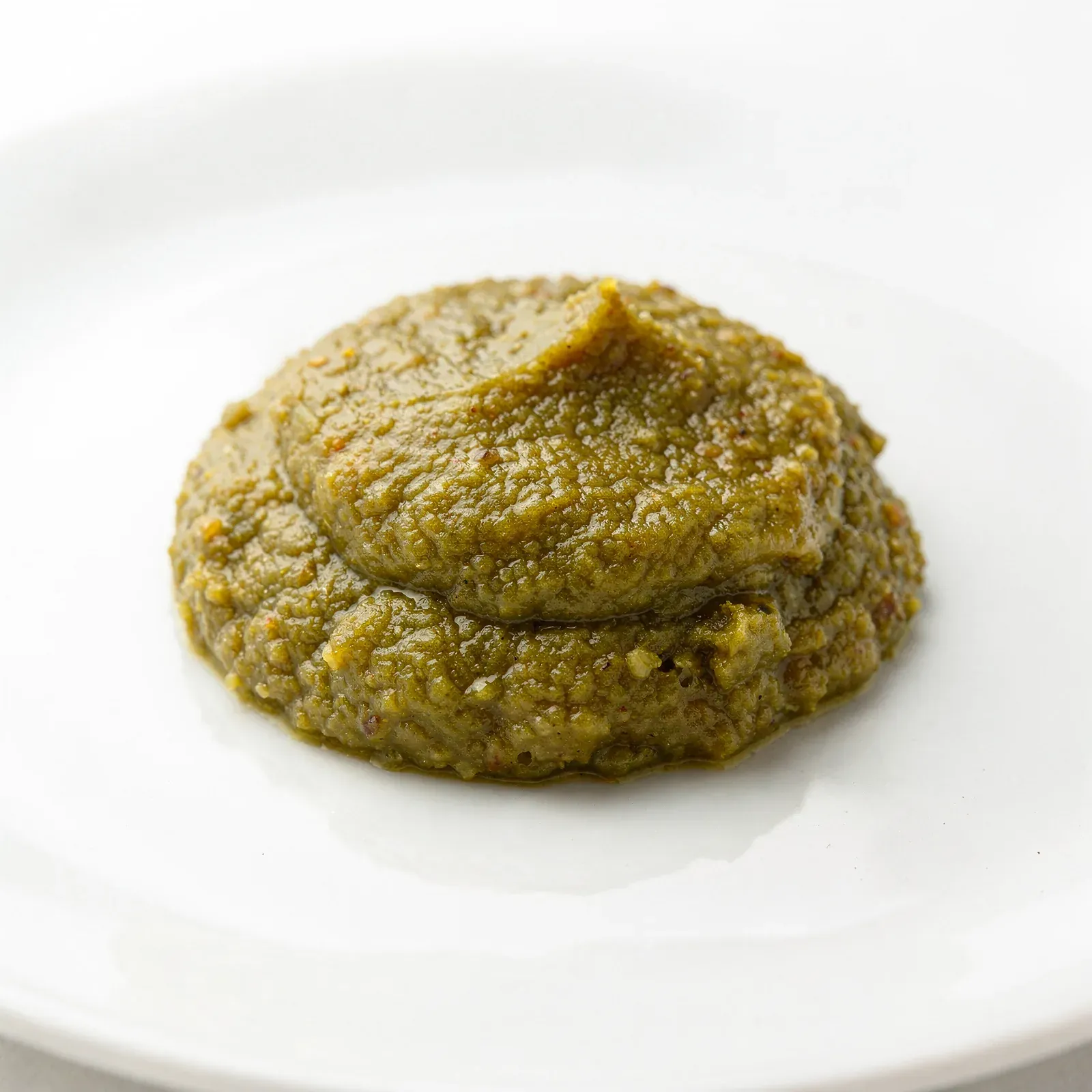
Yuzu kosho is grated yuzu peel, chili, and salt, fermented into a paste, and the family's only spice that is salty in itself. The name misleads: kosho means black pepper in standard Japanese, but in the dialects of Kyushu it means chili, and that is where the product comes from. A small dab delivers citrus aroma and heat at the same time, which nothing else in the family does.
Sensory analysis
Pyramid and character
Aroma
from the jar
- yuzu peel
- chili
- salt
Taste
on the tongue
- citrus
- heat
- saltiness
Finish
what lingers
- fresh
- warm
- long
Character 0-100 per axis, set relative to the other entries in the same family. An editorial judgment of a typical serving, not measurements.
Background
Facts
- Origin
- Kyushu, with Hita in Oita and Soeda in Fukuoka as the places usually singled out, both yuzu-growing districts
- The name
- kosho means black pepper in standard Japanese but chili in the Kyushu dialects, so the name reads literally as yuzu and pepper but means yuzu and chili
- Contents
- grated yuzu peel, chili, and salt, left to ferment; the salt is both preservation and flavor
- Variants
- green is made from unripe yuzu and green chili and is sharper and more herbal; red is made from ripe yuzu and red chili and is fruitier, with a rounder heat
- Use
- nabe, grilled meat, sashimi, noodles, and miso soup; a dab at a time, like mustard and not like a sauce
At the table
Use
- Dosage
- half a teaspoon per serving; the salt means more quickly becomes too much
- Timing
- added to finished food or stirred into a dip; the citrus aroma disappears in boiling
- Note
- keep it refrigerated after opening, and it holds its aroma longer if the spoon is dry every time
Keep exploring
Related in the Zukan
- Spices and yakumiFamily
- SudachiCitrus fruit
- Shichimi togarashiSpice
- Ichimi togarashiSpice
- MisoFamily
Evidence
Sources
- Yuzu koshō (Wikipedia) (retrieved 2026-08-12)
- Meet yuzu kosho (Japanese Taste) (retrieved 2026-08-12)
Compiled by Basim Ali Yoshiguchi. . .