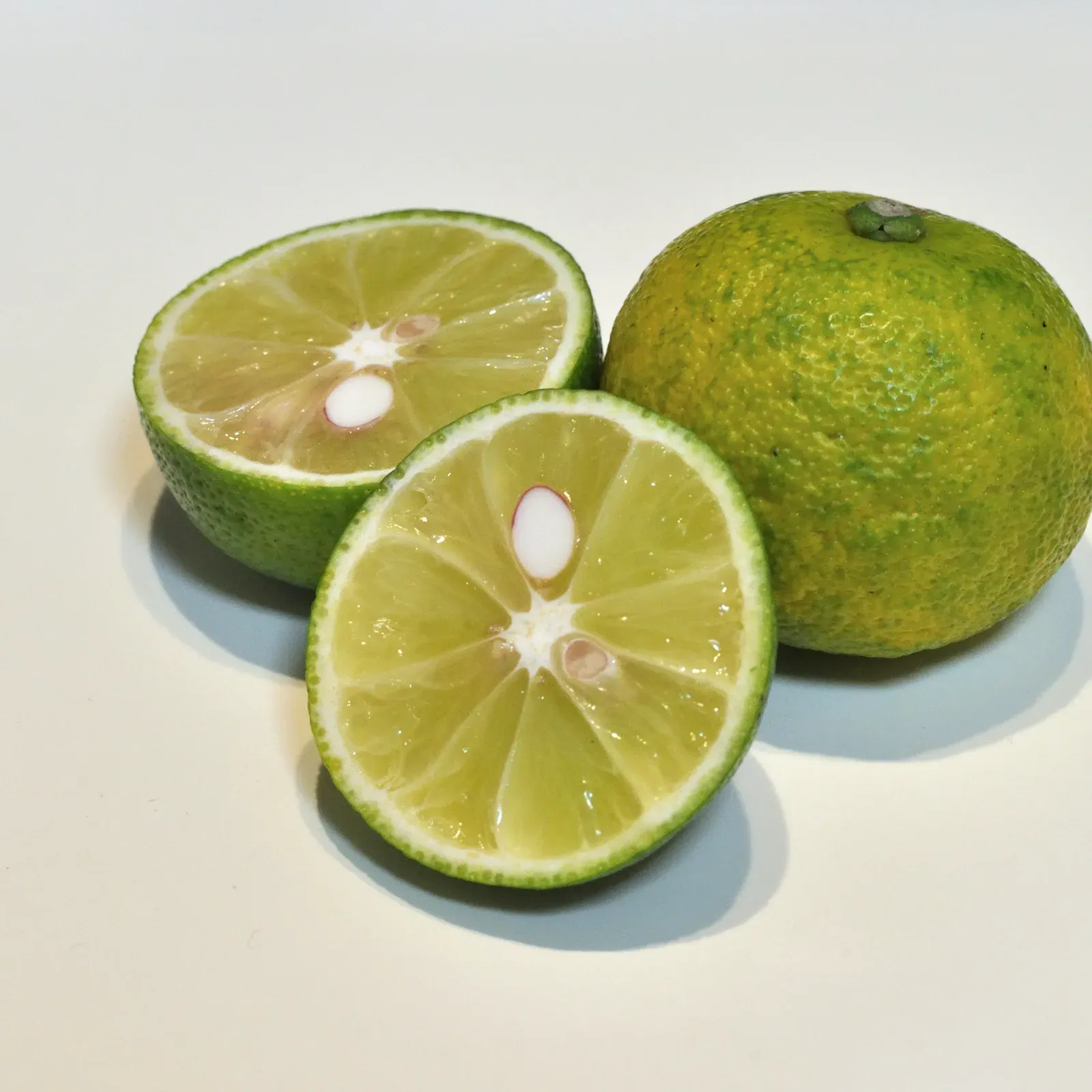

- Citrus fruit
- 酢橘
Sudachi
Picked green, because that is where the aroma sits.
Flavor profile
The strengths are editorial judgments on a scale within the family, not measurements. They can be compared across the citrus varieties, not directly against another family.
Sudachi is a small green citrus from Tokushima that is never eaten whole, only squeezed: half a fruit over grilled fish, soba, or matsutake. It is harvested unripe while the skin is still dark green, because that is where the aroma sits. Within the family it is the small, sharp one, a third the size of a kabosu, and it still delivers both juice and peel aroma worth counting on.
Sensory analysis
Pyramid and character
Aroma
from the peel
- green peel
- lime
- leaf
Taste
on the tongue
- acidity
- citrus
- faint bitterness
Finish
what lingers
- fresh
- short
- clean
Character 0-100 per axis, set relative to the other entries in the same family. An editorial judgment of a typical serving, not measurements.
Background
Facts
- Origin
- Tokushima on Shikoku accounts for 98 percent of the country's shipments, and the fruit is a protected geographical indication under the name Tokushima Sudachi
- The name
- the name comes from sutachibana, written 酢橘, literally vinegar citrus, from the days when the juice was used as vinegar; today it is usually written すだち or スダチ
- Kinship
- Citrus sudachi, which genetic analysis places as a cross between yuzu and a citrus related to the koji and tachibana oranges
- Size
- 30 to 40 grams and 3 to 4 centimeters across, roughly a third the size of a kabosu
- Kabosu
- kabosu comes from Oita, weighs 100 to 140 grams, and has a rounder acidity; sudachi is smaller, sharper, and more aromatic per fruit, and the two are mistaken for each other more often than any other pair in Japanese citrus
- Harvest
- outdoor harvest runs from August to October, with greenhouse growing and storage stretching the season; the skin turns yellow if the fruit is left on the tree, but what is lost by then is aroma
- Use
- squeezed over grilled sanma, sashimi, matsutake in dobin mushi, soba, and udon; in Tokushima also into shochu and in place of vinegar
- Symbol
- the sudachi blossom has been the official flower of Tokushima Prefecture since 1974
At the table
Use
- Dosage
- half a fruit per serving is enough for a grilled fish or a bowl of soba
- Timing
- squeezed just before serving; the aroma is fleeting and survives neither a simmering pot nor a quarter of an hour on the plate
- Note
- the peel carries more aroma than the juice and can be grated over the finished dish; whole fruit keeps for a couple of weeks refrigerated as long as it does not dry out
Keep exploring
Related in the Zukan
- CitrusFamily
- KabosuCitrus fruit
- YuzuCitrus fruit
- Yuzu koshoSpice
- SanshoSpice
Evidence
Sources
- Tokushima Sudachi, registrerad geografisk beteckning nr 129 (MAFF) (retrieved 2026-08-14)
- Tokushimas fyra varumärkesråvaror (Tokushima prefektur) (retrieved 2026-08-14)
- Sudachi (Wikipedia) (retrieved 2026-08-14)
- Sudachi (japanska Wikipedia) (retrieved 2026-08-14)
Compiled by Basim Ali Yoshiguchi. .