
- Citrus fruit
- シークヮーサー
Shikuwasa
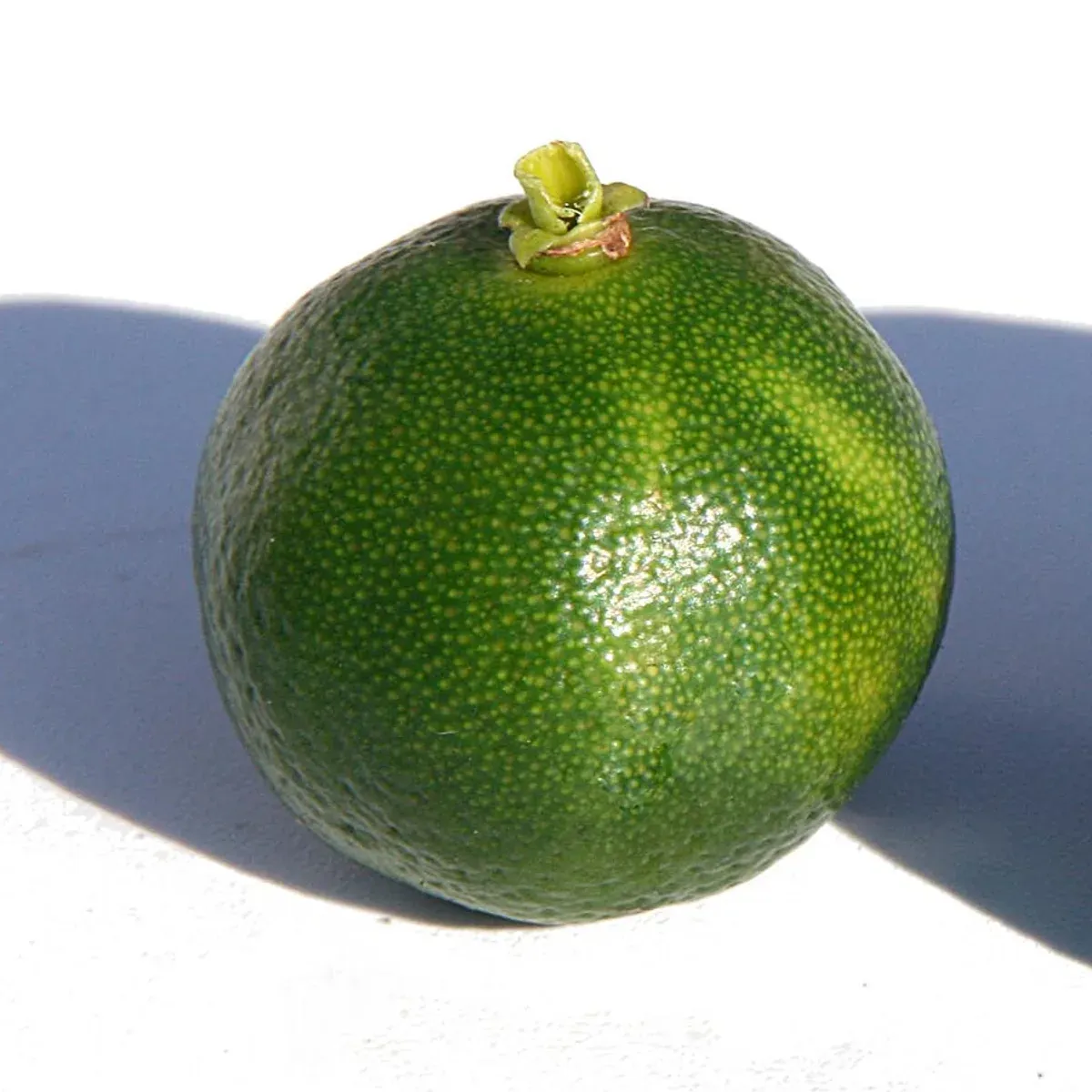
Green it is a lime, ripe it is a fruit.
Flavor profile
The strengths are editorial judgments on a scale within the family, not measurements. They can be compared across the citrus varieties, not directly against another family.
Shikuwasa is Okinawa's citrus and the only one in the family sold as two different products. Picked green in July it is sharply sour and used like a lime, in juice and over food. Left on the tree until winter it turns orange and sweet enough to eat out of hand. The fruit is small, 25 to 60 grams, with a peel thin enough to burst between your fingers.
Sensory analysis
Pyramid and character
Aroma
from the peel
- green peel
- blossom
- grass
Taste
on the tongue
- acidity
- citrus
- sweetness
Finish
what lingers
- fresh
- short
- sweet edge
Character 0-100 per axis, set relative to the other entries in the same family. An editorial judgment of a typical serving, not measurements.
Background
Facts
- Origin
- Okinawa, where it grows wild in the north of the main island and is cultivated in villages such as Ogimi; it is also found in Taiwan
- The name
- from Okinawan shii, sour, and kwasaa, the one that makes you eat, so roughly the one that feeds you sourness; in Japanese it is also called hirami remon, flat-fruit lemon
- Kinship
- Citrus depressa, one of only two citrus species counted as native to Okinawa, the other being tachibana
- Size
- 25 to 60 grams with a thin peel, smaller than a sudachi and a fraction of a kabosu
- Harvest
- from July as aokiri, green-cut, sour and meant for juice and seasoning; fully ripe toward winter it turns orange and sweet
- Use
- squeezed like a lime over food, drunk as juice, poured into awamori; the ripe fruit is eaten as fruit
- The compound
- the peel is unusually rich in nobiletin, a flavonoid that has made the fruit the subject of a great deal of health research in Okinawa
At the table
Use
- Dosage
- two or three fruit per serving, since each gives little; for drinks they are counted by the handful
- Timing
- the green fruit is squeezed over food just before serving, the ripe one juiced or eaten as it is
- Note
- buy for the purpose rather than for the name, since green and ripe shikuwasa are two separate products; bottled juice rarely says which one it came from
Evidence
Sources
- Shikuwasa (japanska Wikipedia) (retrieved 2026-08-14)
- Citrus depressa (Wikipedia) (retrieved 2026-08-14)
Compiled by Basim Ali Yoshiguchi. .