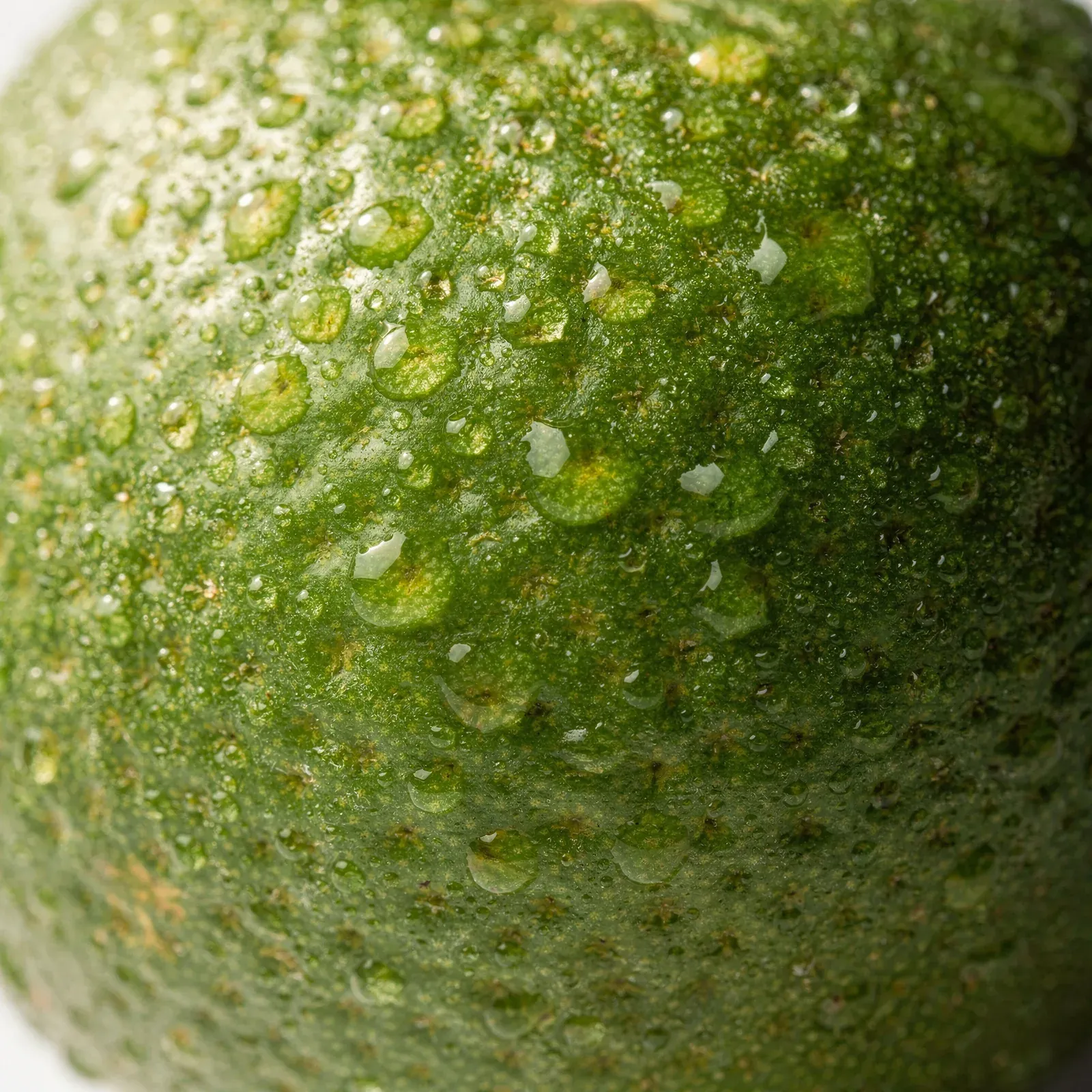
- Family
- 香酸柑橘
Citrus
Squeezed over the food, never peeled and eaten.
The Japanese kitchen has a citrus category of its own: fruit too sour, and often too bitter, to eat, used only for the juice and the peel. Japanese has a collective word for them, kosan kankitsu, and that is the line this family follows. A mikan is peeled and eaten; a sudachi is squeezed over the food. The question when choosing between them is rarely how sour they are, but whether you are after the juice or the aroma in the peel.
Sensory analysis
Pyramid and character
Aroma
from the peel
- peel
- blossom
- acidity
Taste
on the tongue
- acidity
- bitterness
- faint sweetness
Finish
what lingers
- fresh
- short
- clean
Background
Facts
- The name
- kosan kankitsu, 香酸柑橘, literally aroma-and-acid citrus; older Japanese called them su-mikan, vinegar mandarins
- Classification
- yuzu, sudachi, kabosu, shikuwasa, and daidai are the ones found in a Japanese kitchen, but Japan counts more than thirty kinds in the group; mikan, iyokan, and the other eating citrus do not belong here
- Harvest
- most are picked green and unripe, because that is when the acidity peaks and the peel smells strongest; left on the tree they turn yellow and milder, and are then used for other things
- Distinction
- the choice is rarely between sour and less sour but between juice and peel; a yuzu yields almost no juice but everything in aroma, a kabosu the other way around
- Storage
- whole fruit keeps a couple of weeks refrigerated; bottled juice keeps for months but loses the aroma of the peel, which is the volatile half
- Outside Japan
- fresh Japanese citrus is hard to find outside Japan, and what is sold is usually bottled juice
Members of the family
Varieties in the family
Sort by
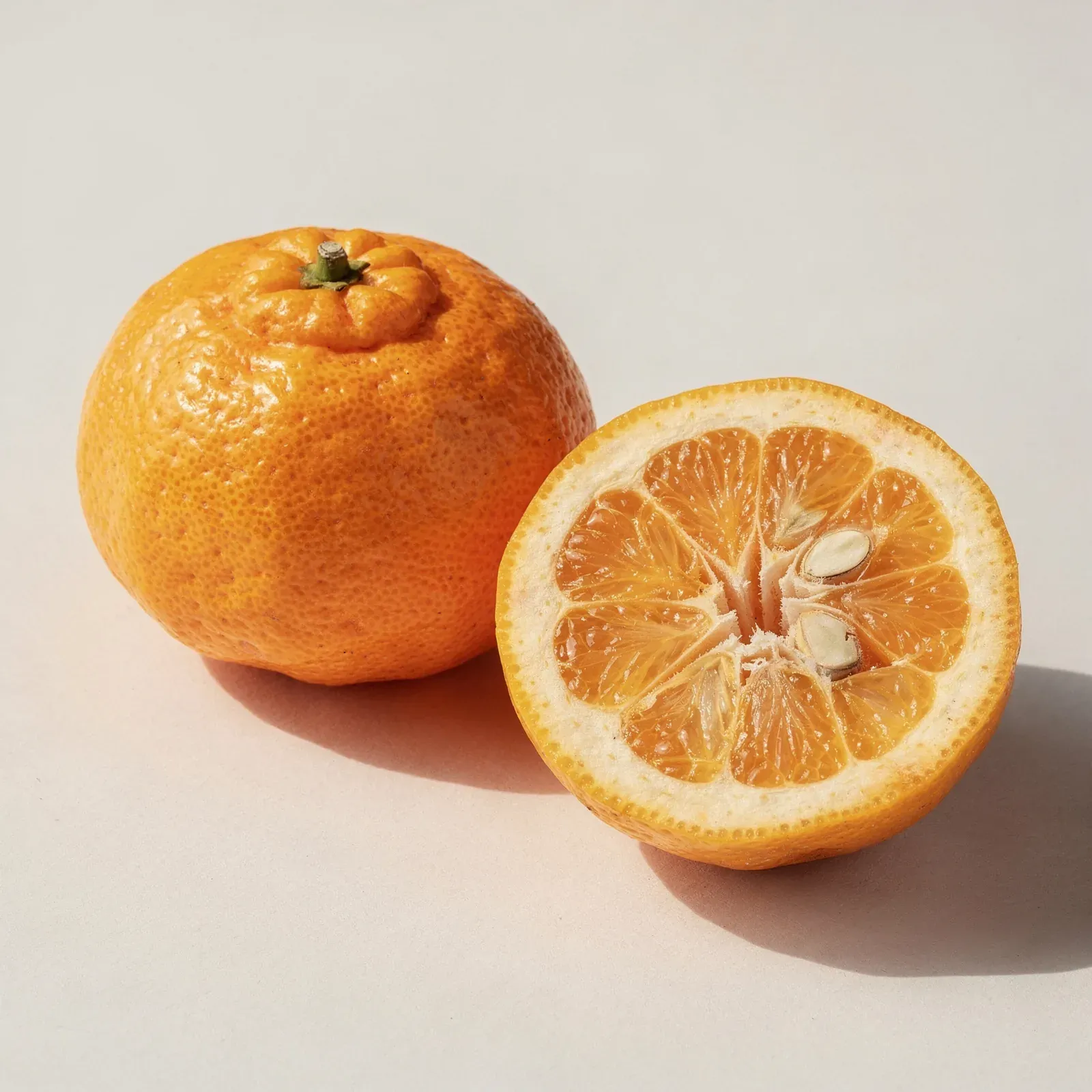 DaidaiMore New Year ornament than ingredient.bitterness 90%Bitternessacidity 85%Aciditypeel aroma 75%Citrus
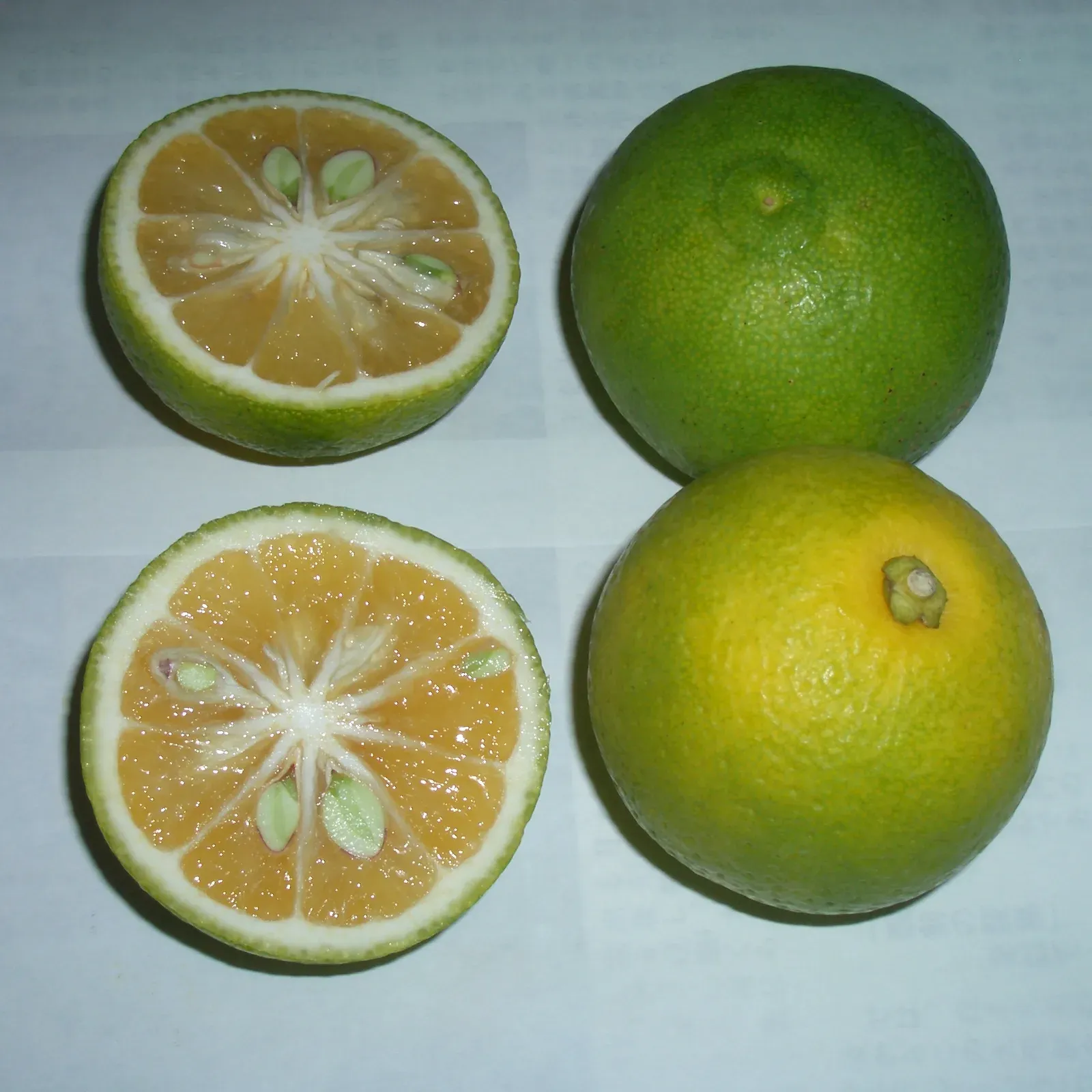 KabosuThe one you pick when you want juice.acidity 80%Aciditymild peel note 55%Citrusgreen tone 45%Grasslow bitterness 25%Bitterness
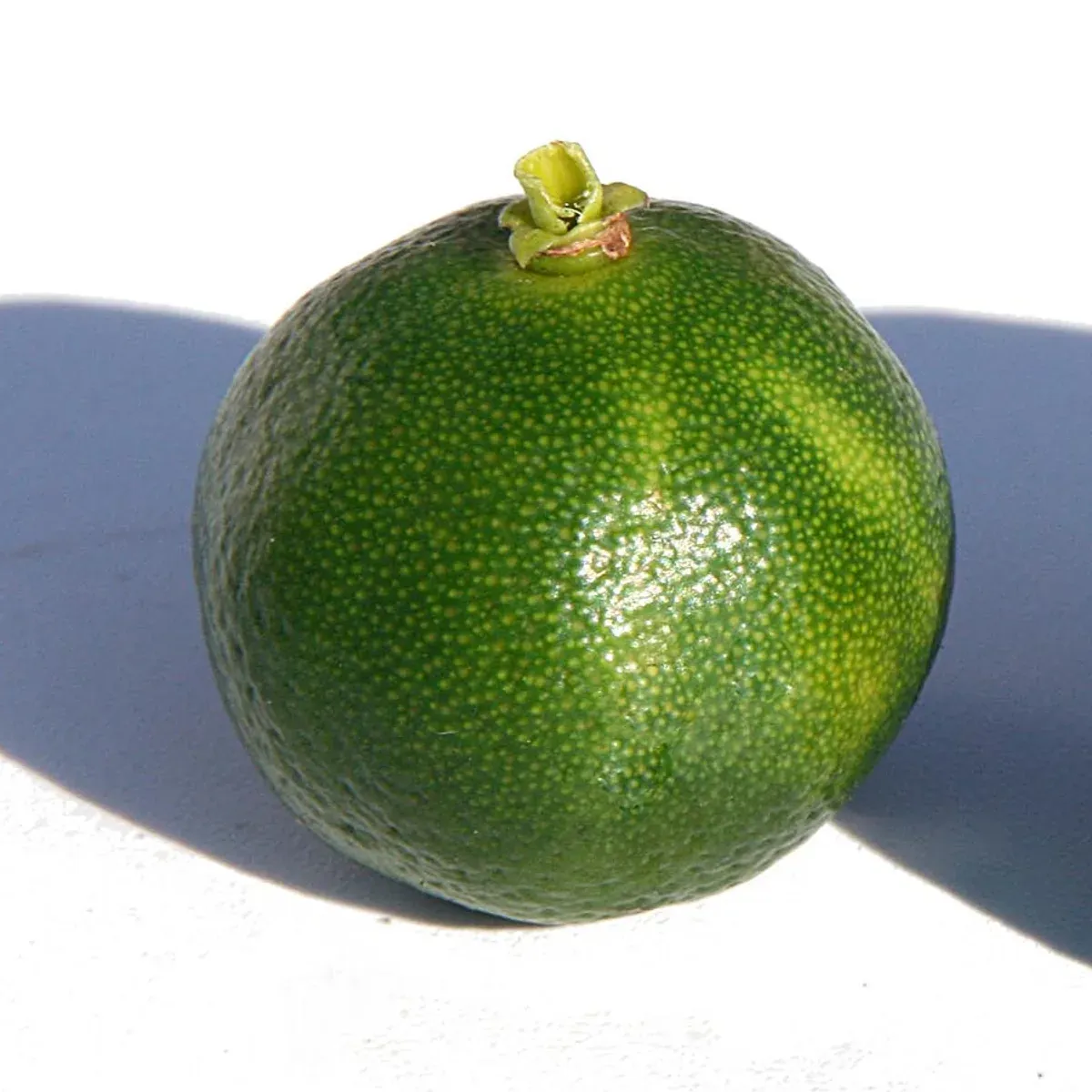 ShikuwasaGreen it is a lime, ripe it is a fruit.acidity 90%Aciditypeel aroma 60%Citrusgreen tone 40%Grasssweetness in the ripe fruit 30%Sweetness
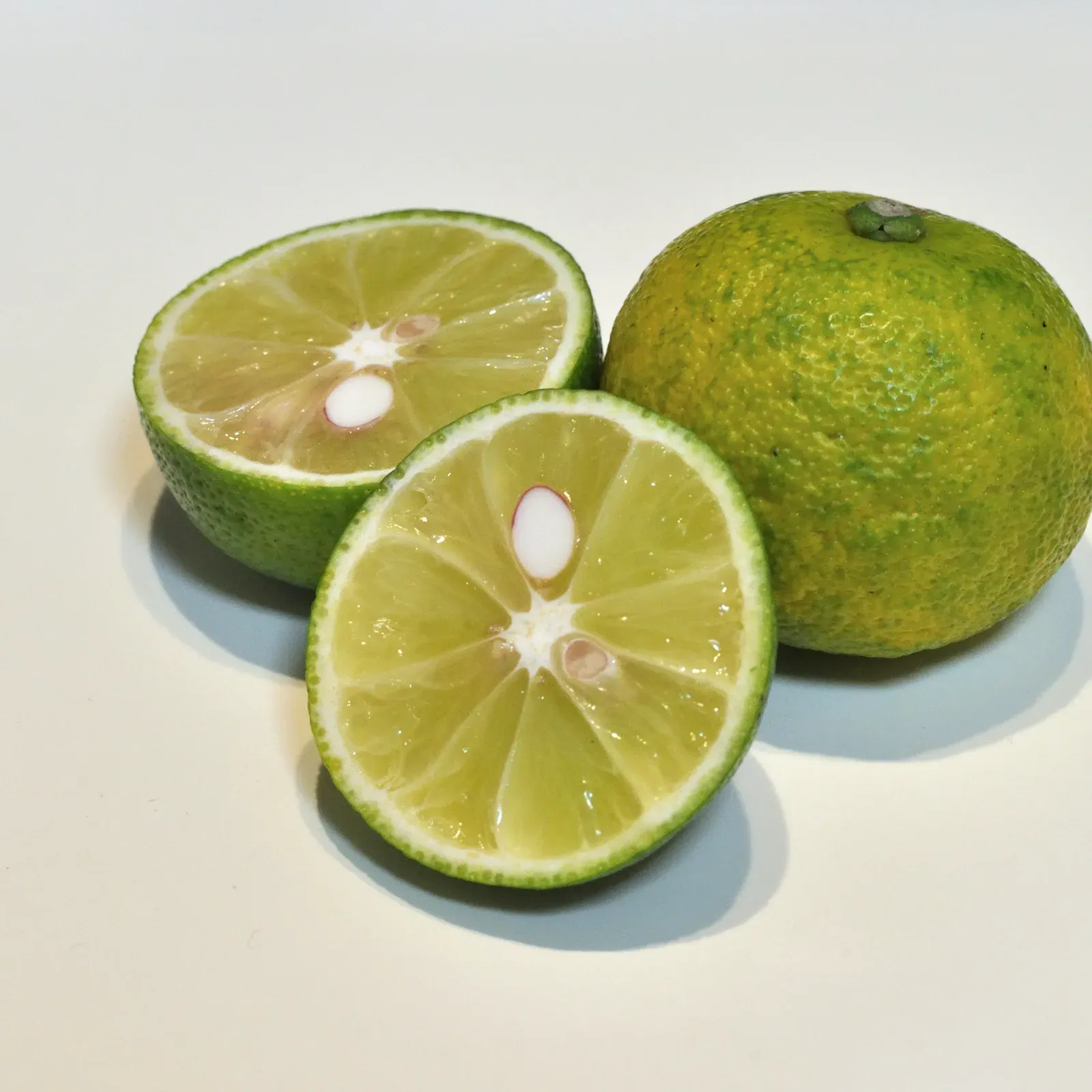 SudachiPicked green, because that is where the aroma sits.green peel 95%Citrusacidity 90%Aciditygreen tone 40%Grassbitterness in the peel 35%Bitterness
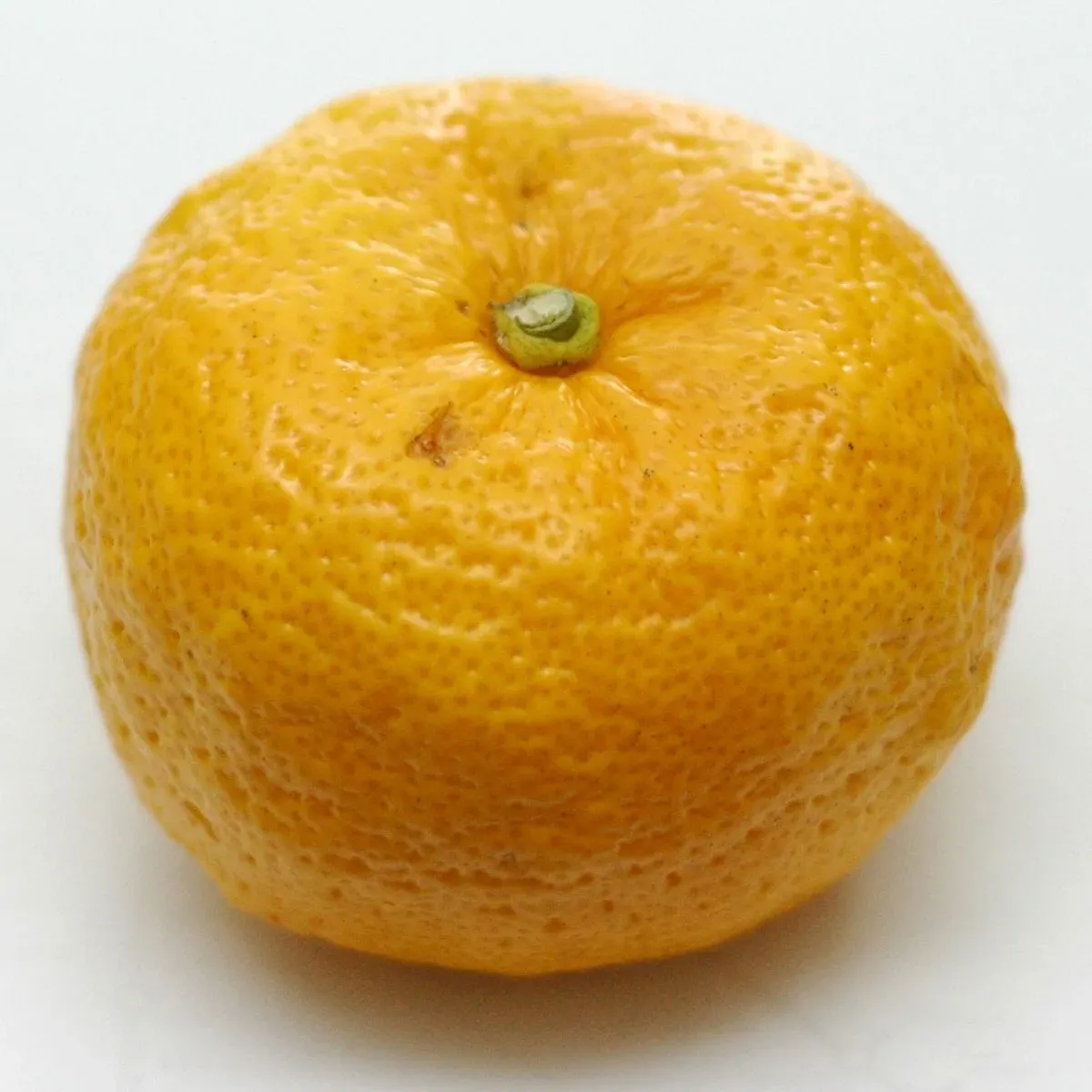 YuzuThe aroma lives in the peel, not in the juice.peel aroma 95%Citrusacidity 80%Aciditybitterness from the pith 45%Bitternessfaint sweetness 20%Sweetness
Evidence
Sources
- 料理の名脇役:日本の香酸かんきつユズ、スダチ、カボス (nippon.com) (retrieved 2026-08-14)
- Tokushima Sudachi, registrerad geografisk beteckning nr 129 (MAFF) (retrieved 2026-08-14)
- Yuzu (Wikipedia) (retrieved 2026-08-14)
Compiled by Basim Ali Yoshiguchi. .