- Citrus fruit
- 橙
Daidai
More New Year ornament than ingredient.
Flavor profile
The strengths are editorial judgments on a scale within the family, not measurements. They can be compared across the citrus varieties, not directly against another family.
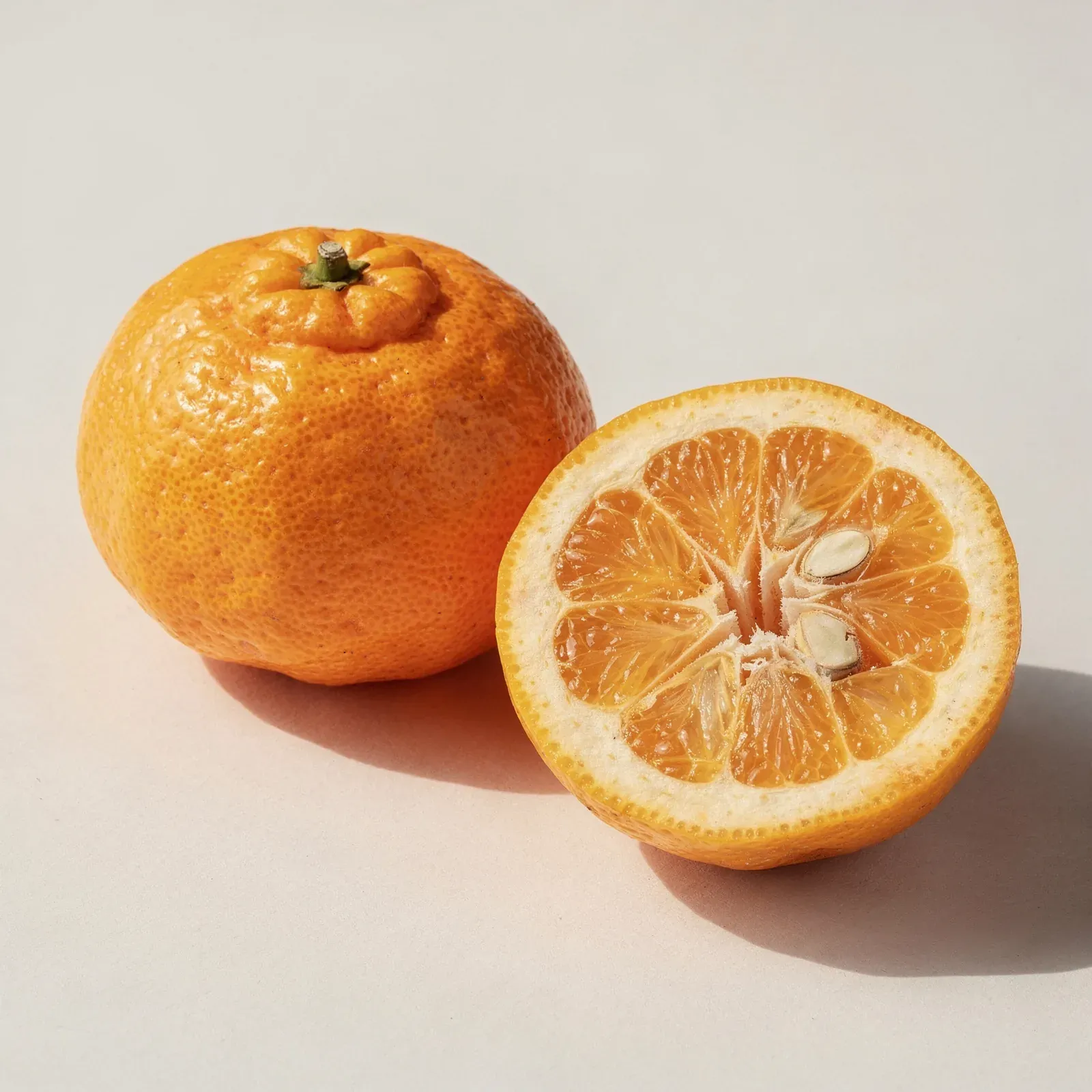
Daidai holds the bitter end of the family. It is not eaten as fruit, the acidity and the bitterness being too strong, but the juice is all the more used: daidai is the original citrus in ponzu and is still sold as freshly squeezed daidai ponzu. The peel is dried for use in Chinese medicine as well. The name means generations, and it comes from real behavior: the fruit stays on the tree for several years.
Sensory analysis
Pyramid and character
Aroma
from the peel
- peel
- bitter orange
- resin
Taste
on the tongue
- bitterness
- acidity
- astringent fruit
Finish
what lingers
- bitter
- long
- dry
Character 0-100 per axis, set relative to the other entries in the same family. An editorial judgment of a typical serving, not measurements.
Background
Facts
- The name
- daidai is written 橙, but it sounds the same as 代々, generation after generation, which is why it became a New Year fruit
- Ripening
- the fruit ripens orange in winter, turns green again the following summer if left on the tree, and orange once more the next winter; that is why several years' fruit hang on the same tree at once
- Distinction
- the acidity and the bitterness are too strong for the fruit to be eaten as fruit, so it is juice, peel, or ornament
- Ponzu
- daidai counts as the original citrus of ponzu, and freshly squeezed daidai ponzu is still sold; the soy is blended with the juice and left to steep with kombu and mirin
- Symbol
- a daidai is set on top of the kagami mochi and into the New Year door wreaths, as a wish for the family to last for generations
- Size
- 7 to 8 centimeters across, larger than the rest of the family and close to a Seville orange, which botanically it also is
- Use
- the juice for ponzu, from green unripe fruit as readily as from ripe, ripe fruit for marmalade, dried ripe peel as chinpi and unripe fruit as kijitsu in Chinese medicine
- Origin
- grown mainly on the Izu peninsula in Shizuoka and around Tanabe in Wakayama, and harvested toward December
At the table
Use
- Dosage
- one fruit goes a long way, and too much juice makes a dish bitter rather than tart
- Timing
- the juice in a ponzu is welcome to sit and mature with the soy for a few days, unlike the rest of the family, which should be squeezed at the last moment
- Note
- the peel is the bitter part and also the interesting one; dry it rather than throw it away
Evidence
Sources
- Daidai (japanska Wikipedia) (retrieved 2026-08-14)
- Bitter orange (Wikipedia) (retrieved 2026-08-14)
- Namashibori Daidai Ponzu (Isse Japan) (retrieved 2026-08-14)
Compiled by Basim Ali Yoshiguchi. .