.jpg)
- Citrus fruit
- 柚子
Yuzu
The aroma lives in the peel, not in the juice.
Flavor profile
The strengths are editorial judgments on a scale within the family, not measurements. They can be compared across the citrus varieties, not directly against another family.
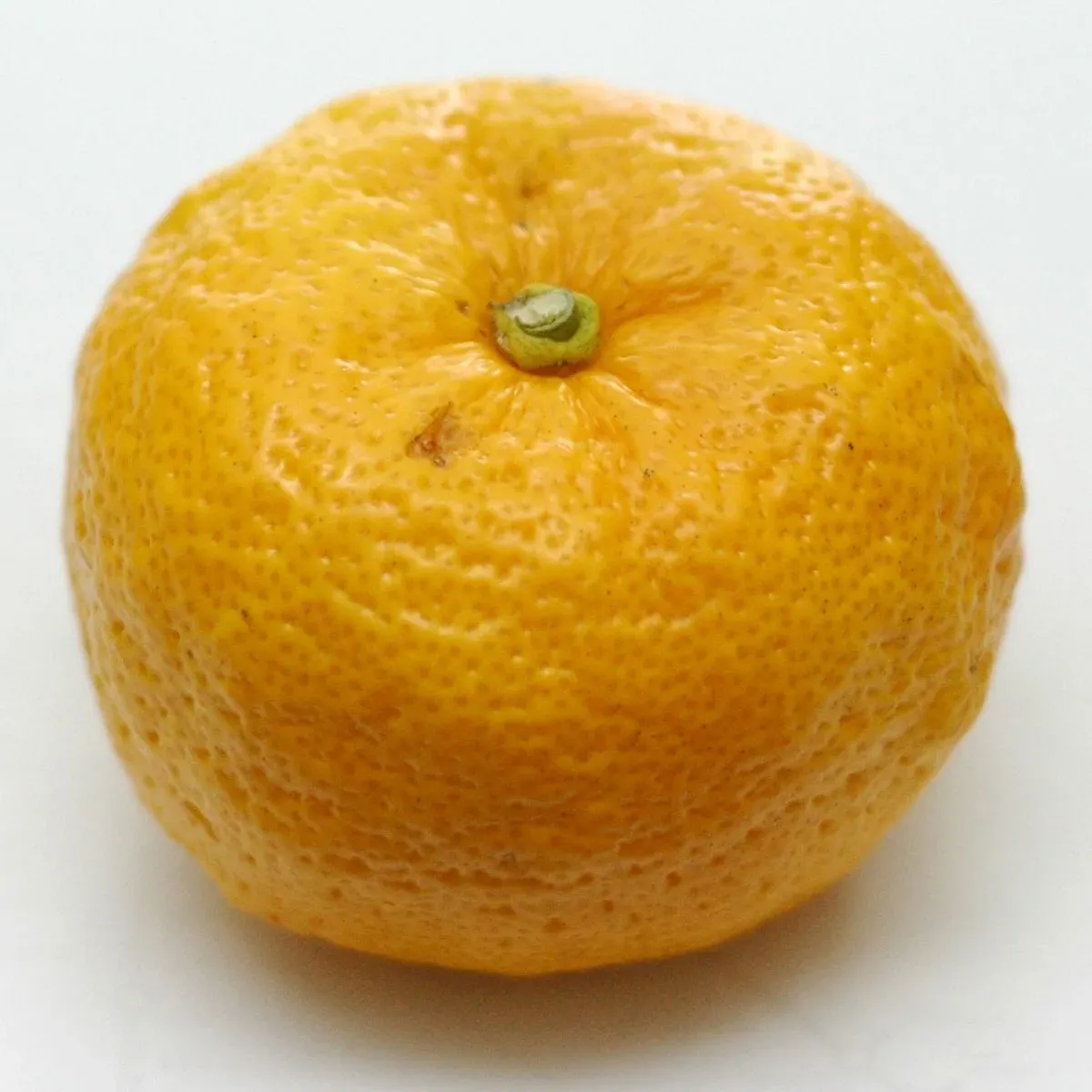
Yuzu is the family's aromatic. The peel is knobbly and thick and carries a fragrance no other Japanese citrus comes close to, while the flesh gives almost no juice and is full of seeds. So yuzu is grated rather than squeezed: a sliver of peel in a clear soup, zest in yuzu kosho and shichimi. It is also the only one in the family with an evening of its own, the bath at the winter solstice.
Sensory analysis
Pyramid and character
Aroma
from the peel
- peel
- blossom
- resin
Taste
on the tongue
- acidity
- bitterness
- perfume
Finish
what lingers
- long
- floral
- cool
Character 0-100 per axis, set relative to the other entries in the same family. An editorial judgment of a typical serving, not measurements.
Background
Facts
- Origin
- originally from inland China; within Japan, Kochi accounts for 40 to 50 percent of production, and Kochi, Tokushima, and Ehime together for about 80 percent
- Kinship
- Citrus junos, which genetics place as a cross between ichang papeda and a mandarin relative, which explains both the cold hardiness and the thick peel
- Size
- about 110 grams and 4 to 8 centimeters across, the same size class as a kabosu and three times a sudachi
- Distinction
- the juice is scant and the seeds many; the peel is the product here, unlike the rest of the family
- Harvest
- green yuzu from mid-August to October, yellow from November; the green is sharper and more herbal, the yellow rounder and more perfumed
- Cultivation
- the tree is cold-hardy down to about minus 7 degrees Celsius, unusual for citrus, but slow, and a Japanese proverb lists how long fruit trees make you wait and gives yuzu eighteen years
- The custom
- at the winter solstice whole fruit or peel is floated in the bath, yuzuyu, a custom still kept at home and at the public baths
At the table
Use
- Dosage
- a sliver of peel per serving is enough; the juice is used sparingly and almost always alongside something else
- Timing
- the peel goes onto finished food or floats in the soup for the last few seconds; boiling takes the aroma
- Note
- the seeds make the fruit impractical to squeeze straight over food, so strain the juice or reach for another in the family when juice is what you want
Evidence
Sources
- Yuzu (japanska Wikipedia) (retrieved 2026-08-14)
- Yuzu (Wikipedia) (retrieved 2026-08-14)
- 料理の名脇役:日本の香酸かんきつユズ、スダチ、カボス (nippon.com) (retrieved 2026-08-14)
Compiled by Basim Ali Yoshiguchi. .