
- Pickle
- 紅生姜
Beni shoga
The umeboshi's brine, the ginger's bite.
Flavor profile
The strengths are editorial judgments on a scale within the family, not measurements. They can be compared across the tsukemono varieties, not directly against another family.
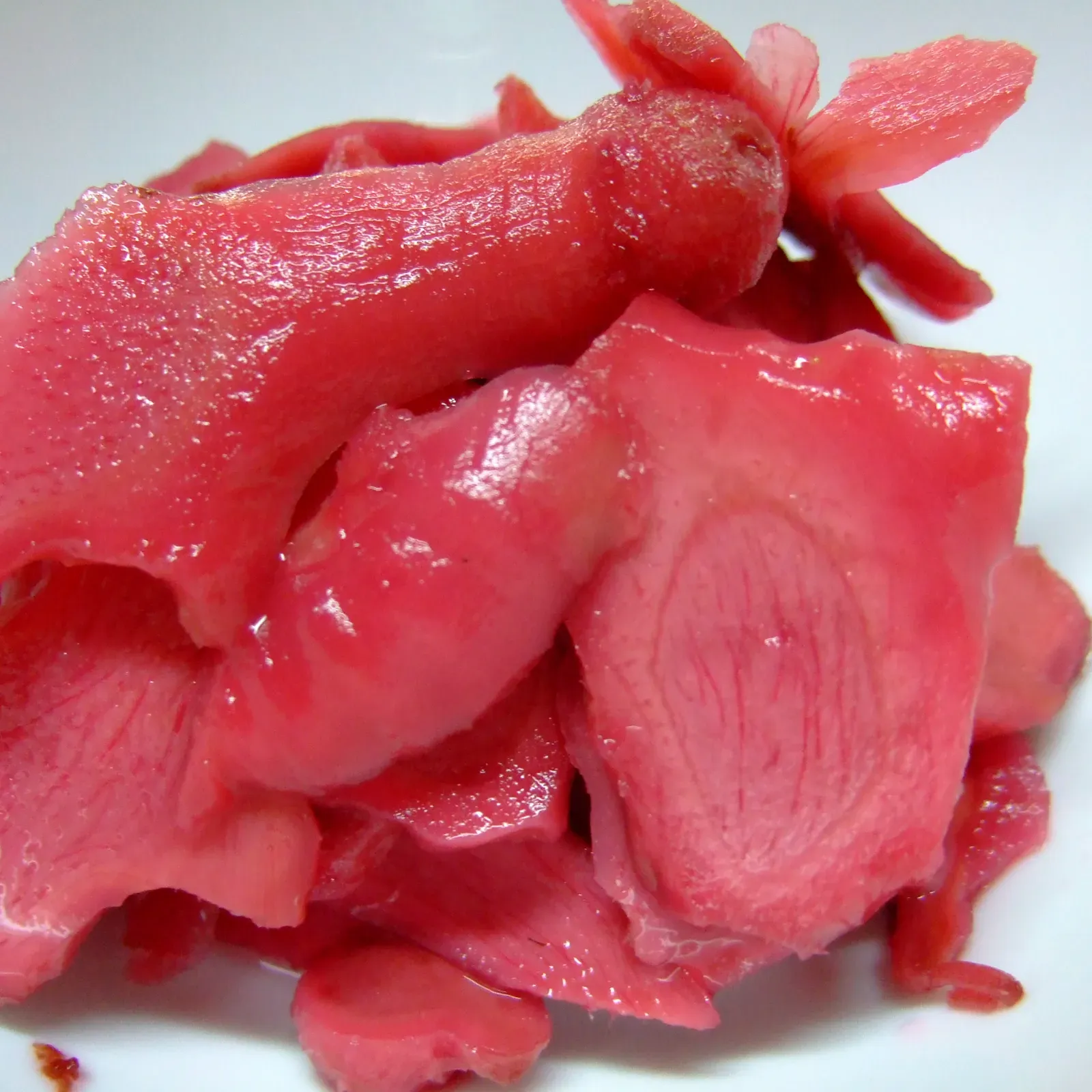
Beni shoga is the red ginger: mature ginger in shreds, laid in umezu, the salty brine left over from umeboshi making. Where gari is sweet and pale, beni shoga is salty, sharp, and signal red, and it lives in street food: on gyudon, yakisoba, okonomiyaki, and inside takoyaki. The name simply means red ginger.
Sensory analysis
Pyramid and character
Aroma
from the jar
- ginger
- salty brine
- ume
Taste
on the tongue
- salinity
- acidity
- sharpness
Finish
what lingers
- warm
- salty
- short
Character 0-100 per axis, set relative to the other entries in the same family. An editorial judgment of a typical serving, not measurements.
Background
Facts
- Method
- mature ginger is salted or lightly dried, shredded, and left for a few days in umezu; the acidity and salinity come from the brine, not from any fermentation
- Connection
- umezu is the byproduct of umeboshi; what remains when the plums have been salted becomes brine for the ginger, a kitchen where nothing is thrown away
- Color
- traditionally the red comes from red shiso in the umezu and from the ginger's own pigments turning in the acid; industrially it usually comes from dyes, and then the tone goes neon red
- Usage
- the shreds sit as a small red crown on gyudon, yakisoba, and okonomiyaki, and chopped they hide inside takoyaki; in Osaka whole slices are fried as tempura
- Confusion
- gari is the other sushi ginger, young ginger in sweet amazu; beni shoga is mature, salty, and laid in umezu, and the two never trade places
At the table
Serving
- Dosage
- a pinch of shreds on top of a finished bowl; it should cut through the richness, not take over
- Timing
- always on the finished dish, never in the pot; heat takes both the sharpness and the color
- Note
- keeps for months in the fridge in its brine; a jar with a short ingredient list, ginger, umezu, salt, is the traditional one
Evidence
Sources
- Beni shoga (Wikipedia) (retrieved 2026-08-15)
- 紅生姜 (japanska Wikipedia) (retrieved 2026-08-15)
- Umezu (Wikipedia) (retrieved 2026-08-15)
Compiled by Basim Ali Yoshiguchi. .