
- Pickle
- 梅干し
Umeboshi
One bite carries a whole bowl of rice.
Flavor profile
The strengths are editorial judgments on a scale within the family, not measurements. They can be compared across the tsukemono varieties, not directly against another family.
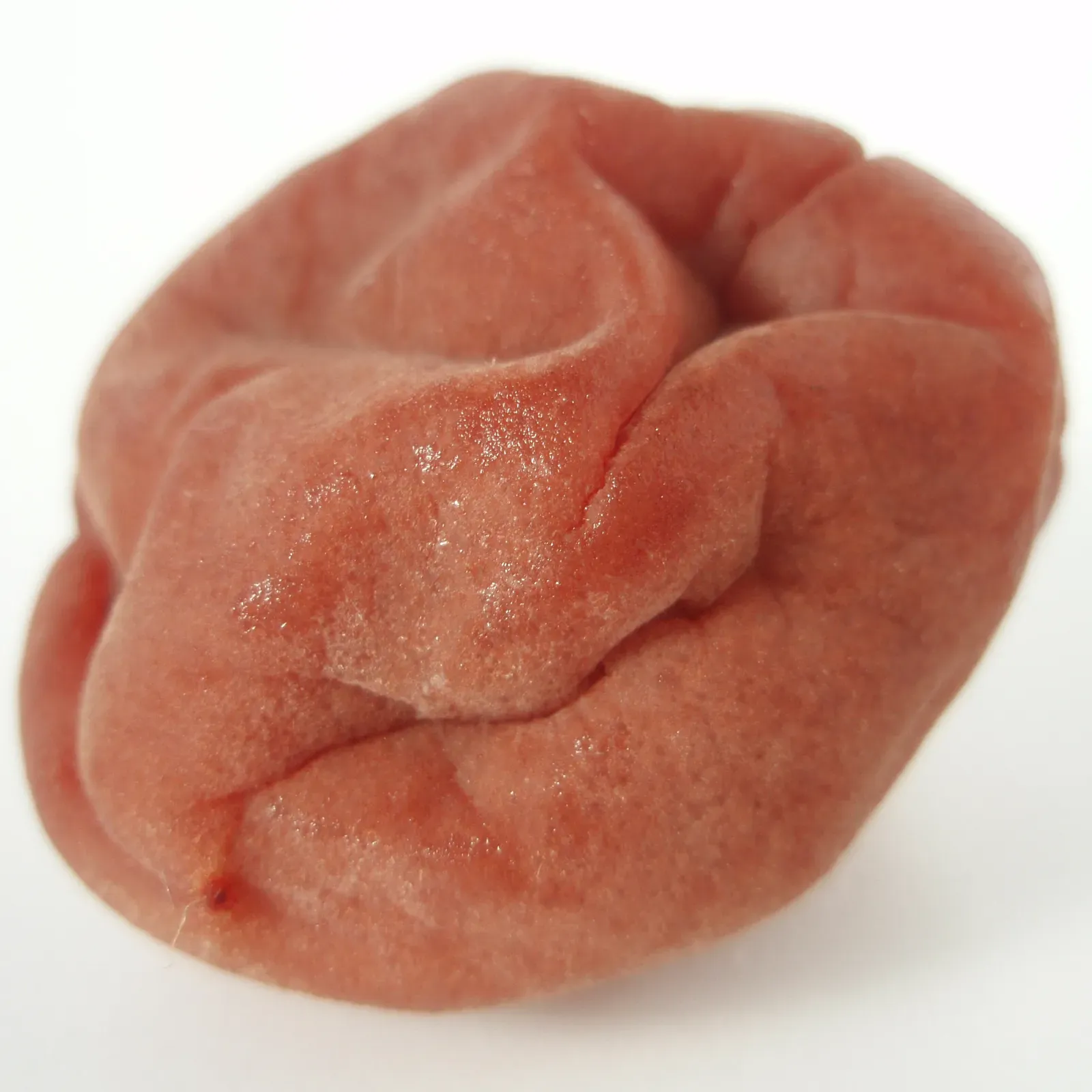
Umeboshi is salted and sun-dried ume, a fruit closer to the apricot than the plum, and the sourest, saltiest thing that lands on a Japanese table. Traditionally the fruit is salted with about a fifth of its weight, left to steep in its own brine, and then dried in the midsummer sun. A single umeboshi carries a whole bowl of rice, and that is exactly how it is meant to be dosed.
Sensory analysis
Pyramid and character
Aroma
from the jar
- fruity
- tangy
- salty
Taste
on the tongue
- sharp acidity
- salinity
- ume
Finish
what lingers
- long
- mouthwatering
- clean
Character 0-100 per axis, set relative to the other entries in the same family. An editorial judgment of a typical serving, not measurements.
Background
Facts
- Raw material
- ume, Prunus mume, harvested yellow and ripe in late May or early June; despite the common name Japanese plum it is botanically closer to the apricot
- Method
- the fruit is layered with salt, around 20 percent of its weight, steeps for a couple of weeks in the brine the salt draws out, and is then sun-dried on bamboo mats for a few days at the height of summer, a step with its own name, doyoboshi
- Salt
- a traditional shirahoshi sits around 20 percent salt and above; modern honey and low-salt versions sit at a fraction of that, but then need the preservatives the salt used to be
- Color
- the red color comes from red shiso added to the brine; without shiso an umeboshi is yellowish brown
- Umezu
- the leftover brine is called umezu, plum vinegar, though it is no vinegar at all; it is reused in the kitchen and is what gives beni shoga its acidity
- Origin
- Wakayama is the center, with the towns of Minabe and Tanabe as the largest producers and the cultivar Kishu nanko as the most renowned
- History
- samurai carried umeboshi as field rations against fatigue, and hinomaru bento, a single red umeboshi in the middle of white rice, is named after the Japanese flag
- Confusion
- umezuke is the same salted fruit without the sun-drying; it is the drying that makes an umeboshi an umeboshi
At the table
Serving
- Dosage
- one fruit per bowl of rice or onigiri; umeboshi is one bite at a time, never a portion
- Serving
- in the middle of an onigiri, on the rice in a bento, mashed into chazuke, or as acidity in dressings and stews; for colds, traditionally in rice porridge
- Note
- a properly salted umeboshi keeps for years in the pantry; the low-salt versions belong in the fridge and carry a date for a reason
Evidence
Sources
- Umeboshi (Wikipedia) (retrieved 2026-08-15)
- 梅干し (japanska Wikipedia) (retrieved 2026-08-15)
- Umezu (Wikipedia) (retrieved 2026-08-15)
Compiled by Basim Ali Yoshiguchi. .