
- Pickle
- 沢庵
Takuan
The louder the crunch, the better.
Flavor profile
The strengths are editorial judgments on a scale within the family, not measurements. They can be compared across the tsukemono varieties, not directly against another family.
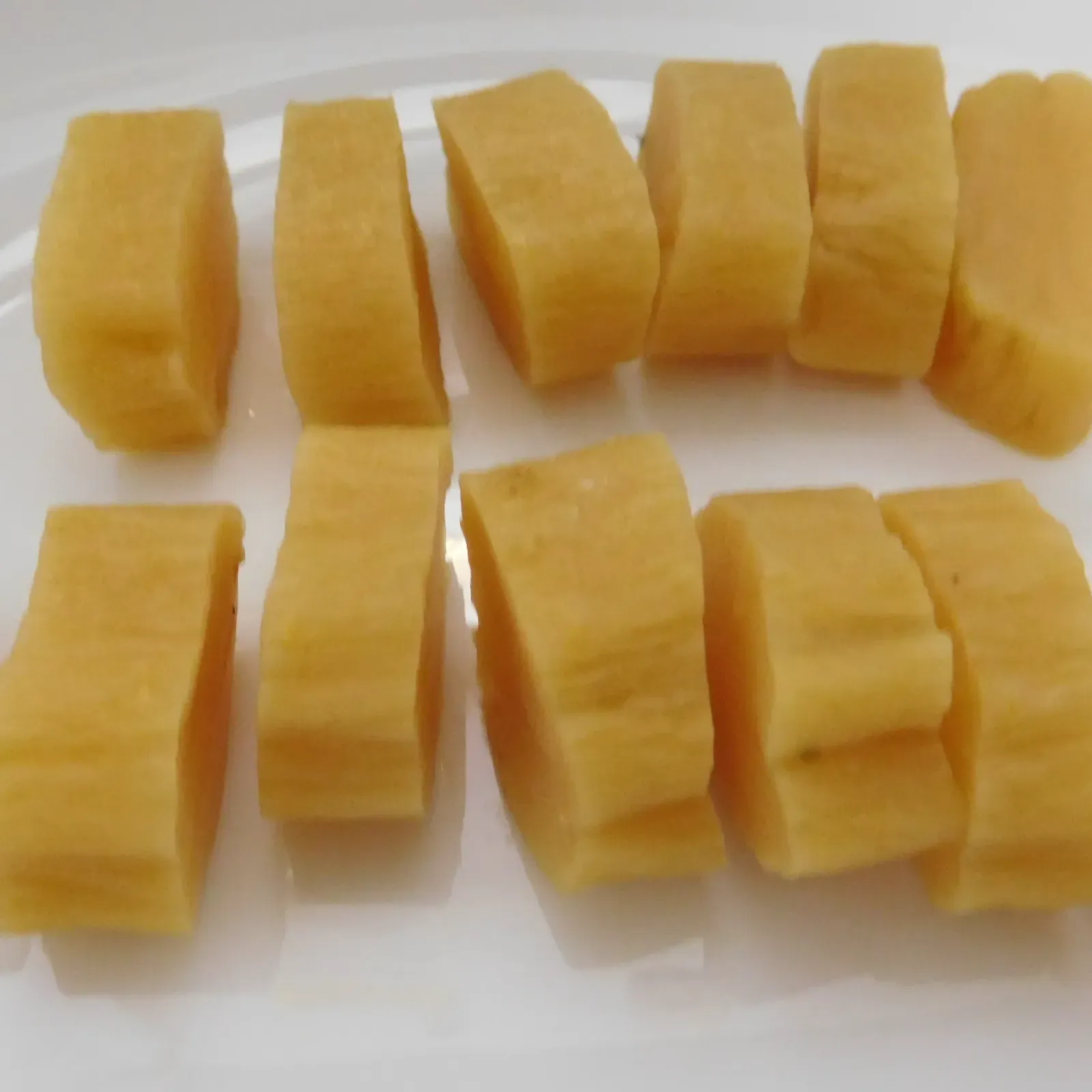
Takuan is Japanese pickled daikon: the radish is sun-dried until it bends, bedded down in rice bran and salt, and left to ferment for months. The result is yellow, sweet-salty, and above all crunchy; the loud bite is half the point. Supermarket takuan often takes a shortcut past both the sun-drying and the fermentation, and then the yellow comes from coloring rather than from the radish itself.
Sensory analysis
Pyramid and character
Aroma
from the jar
- fermented
- daikon
- sweetish
Taste
on the tongue
- sweet-salty
- tangy
- umami
Finish
what lingers
- crunchy
- clean
- long
Character 0-100 per axis, set relative to the other entries in the same family. An editorial judgment of a typical serving, not measurements.
Background
Facts
- The name
- said to come from the Zen monk Takuan Soho, who according to legend served his pickled radish to the shogun Tokugawa Iemitsu; historical evidence is lacking, and a competing explanation derives the word from takuwaezuke, storage pickle
- Method
- the radish is hung in the sun for two to three weeks until it turns pliable, then packed in rice bran and salt and fermented for months; more salt means longer keeping
- Color
- the yellow arises on its own as compounds in the radish break down during fermentation; industrial takuan is dehydrated quickly with salt instead and colored with turmeric or gardenia
- Variants
- iburigakko from Akita is smoked over the hearth instead of sun-dried, and received a protected geographical indication in 2019
- Serving
- two slices has been the custom since the Edo period; one or three carried unlucky connotations
- Outside Japan
- Korea has its own version, danmuji, usually sweeter and in thicker slices, known from kimbap
At the table
Serving
- Dosage
- two or three thin slices beside the rice are enough; takuan is a side, not a salad
- Timing
- served at the end of the meal with the rice, preferably with tea; at the sushi counter it goes into shinko maki
- Note
- a glowing yellow takuan with a short ingredient list is dyed and quick-cured; a fermented one is recognized by its aroma, round and slightly sharp at once
Evidence
Sources
- Takuan (Wikipedia) (retrieved 2026-08-15)
- 沢庵漬け (japanska Wikipedia) (retrieved 2026-08-15)
- Takuan Soho (Wikipedia) (retrieved 2026-08-15)
Compiled by Basim Ali Yoshiguchi. .