
- Pickle
- 糠漬け
Nukazuke
Not a product, a practice.
Flavor profile
The strengths are editorial judgments on a scale within the family, not measurements. They can be compared across the tsukemono varieties, not directly against another family.
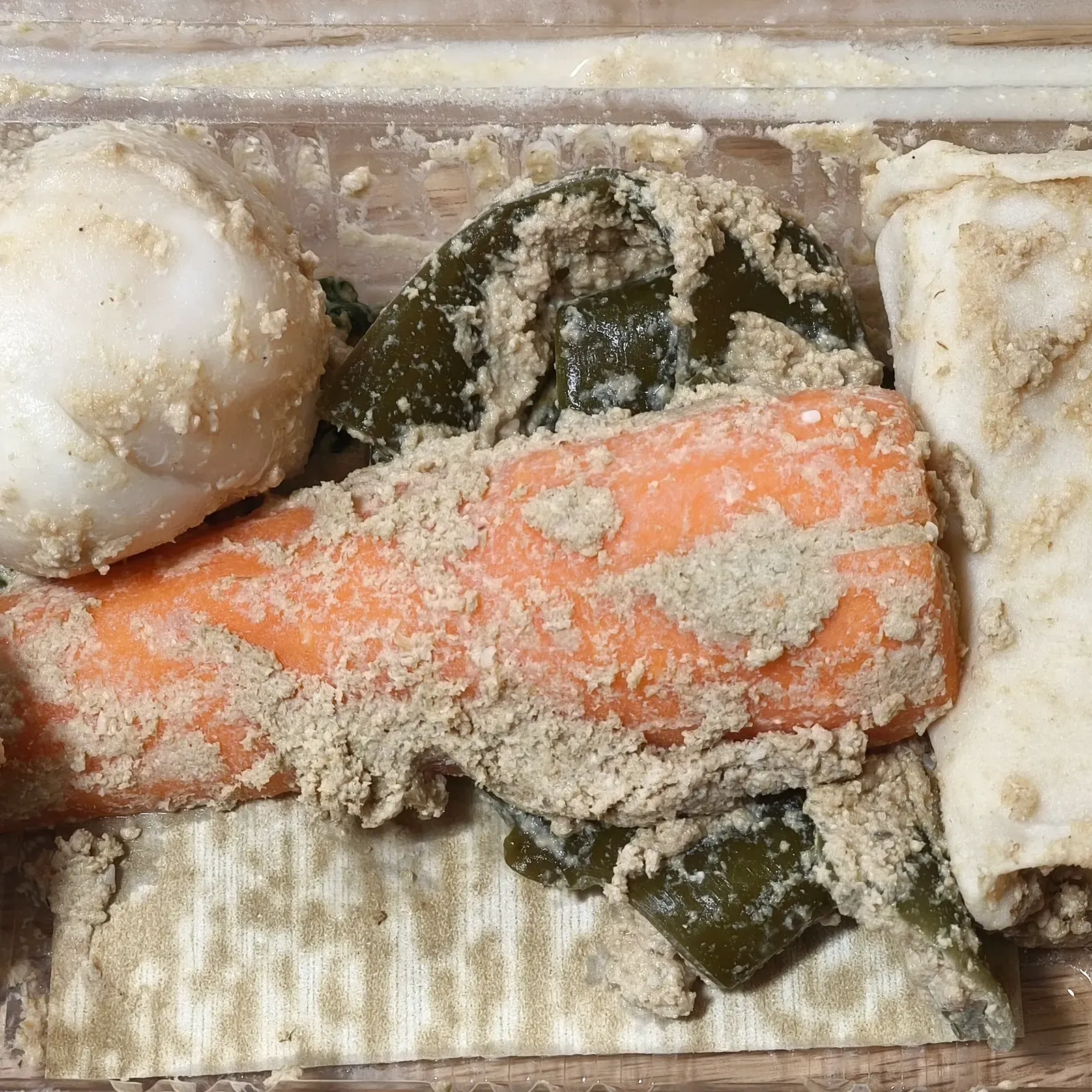
Nukazuke are vegetables fermented in a bed of rice bran, salt, and water, a nukadoko, which is stirred daily and can live for decades. Cucumber, eggplant, and daikon go in at night and come out the next day, tangy, salty, and still crisp. It is the only pickle in the family that is not a product but a practice: the bed is alive and tended like a sourdough.
Sensory analysis
Pyramid and character
Aroma
from the jar
- tangy
- bran
- fermented
Taste
on the tongue
- salinity
- lactic acidity
- umami
Finish
what lingers
- fresh
- fermented
- long
Character 0-100 per axis, set relative to the other entries in the same family. An editorial judgment of a typical serving, not measurements.
Background
Facts
- Method
- the bed is rice bran, often roasted, brine at around 8 percent, and whatever you want to season with, kombu, dried chili, ginger; the consistency should resemble wet sand
- In practice
- the bed is stirred daily by hand, from the bottom, so oxygen gets down and no corner molds; whoever travels puts it in the fridge, where it manages a couple of weeks
- Organism
- salt-tolerant lactic acid bacteria build the acidity, and wild yeasts that move in after a month or so build the aroma; a new bed improves with age and old beds are valued highest
- Nutrition
- B vitamins from the bran migrate into the vegetable during fermentation, and in the Edo period this helped city dwellers who ate polished white rice against beriberi, known as the Edo disease
- Raw material
- cucumber, eggplant, daikon, carrot, and turnip are the classics; eggs, bell pepper, and even fish turn up
- History
- the form spread in the early Edo period, when polished white rice made bran an everyday commodity; a precursor of ground grains and salt, susuhori, is known from excavations at Heijokyo
- The custom
- a nukadoko is inherited; a bed tended for generations carries its household's history in its flavor, and taking one over means taking over a responsibility
At the table
Serving
- Time
- a cucumber takes half a day to a full day, firmer vegetables longer; the longer the time, the tangier and deeper
- Serving
- the vegetable is brushed or rinsed free of bran, sliced, and served as is, usually at the end of the meal with the rice
- Note
- a piece forgotten in the bed is not ruined, just sharper; long-fermented nukazuke is chopped fine and eaten like furikake on the rice
Evidence
Sources
- Nukazuke (Wikipedia) (retrieved 2026-08-15)
- 糠漬け (japanska Wikipedia) (retrieved 2026-08-15)
Compiled by Basim Ali Yoshiguchi. .