.jpg)
- Pickle
- 柴漬け
Shibazuke
The acidity and the color come from the ferment, not the brine.
Flavor profile
The strengths are editorial judgments on a scale within the family, not measurements. They can be compared across the tsukemono varieties, not directly against another family.
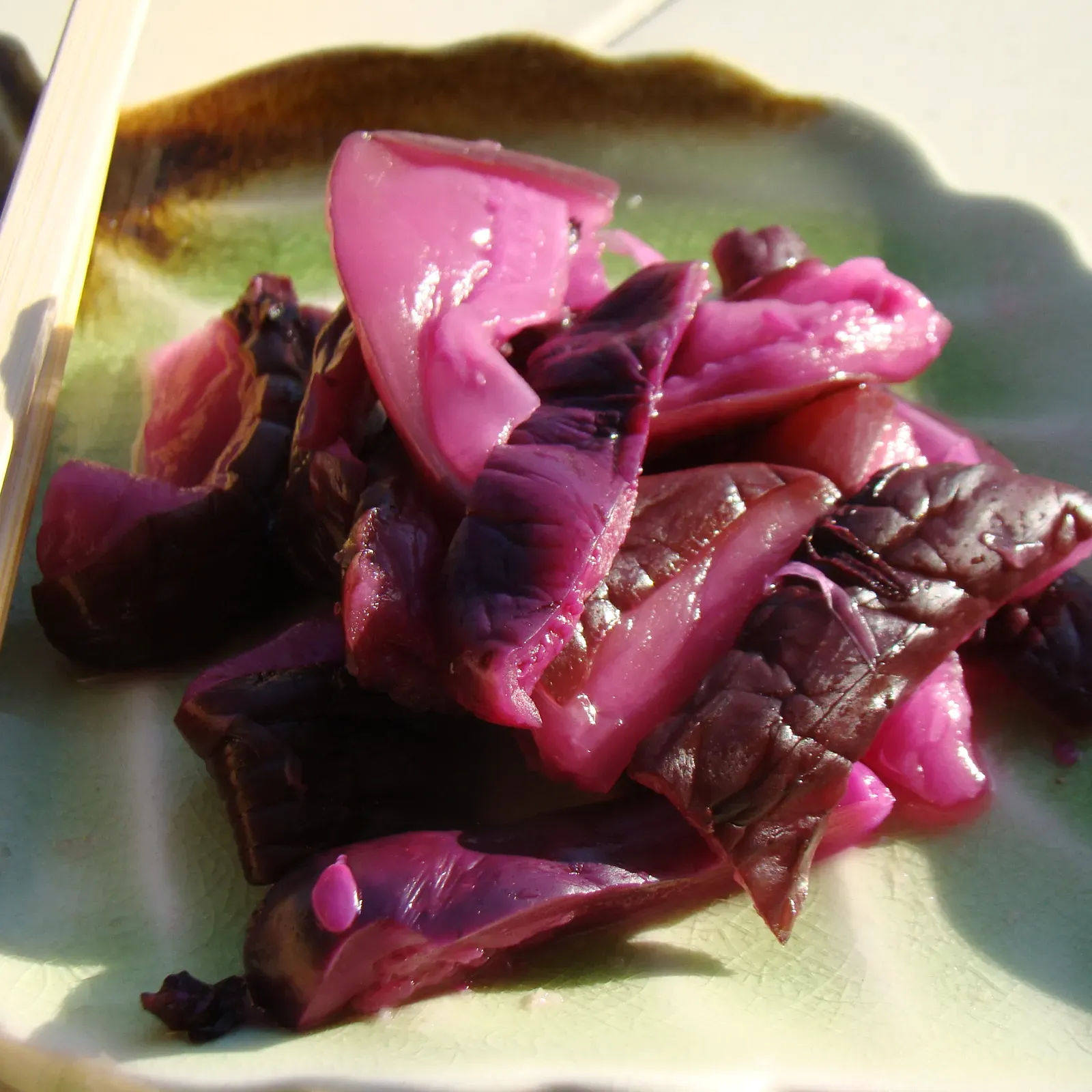
Shibazuke is Kyoto's purple pickle: eggplant and red shiso lacto-fermented with nothing but salt. The acidity and the violet color emerge from the fermentation itself. It counts among Kyoto's three great pickles and is the deepest ferment in the family. Most of what is sold under the name today, though, is a quick version of cucumber in seasoned brine, and the difference is felt on the first bite.
Sensory analysis
Pyramid and character
Aroma
from the jar
- shiso
- tangy
- fermented
Taste
on the tongue
- lactic acidity
- salinity
- eggplant
Finish
what lingers
- long
- tangy
- herbal
Character 0-100 per axis, set relative to the other entries in the same family. An editorial judgment of a typical serving, not measurements.
Background
Facts
- Origin
- the village of Ohara northeast of Kyoto, an area that has long grown red shiso; it is the shiso that provides both the color and half the aroma
- Method
- the traditional version is nothing but eggplant, red shiso, and salt left to lacto-ferment; the acidity is built by the bacteria, no vinegar is added
- In practice
- the supermarket version is usually made of salted cucumber with eggplant, ginger, and myoga in seasoned brine, sometimes with coloring; it is a side dish in the same color but a different product
- The name
- also written 紫葉漬け, pickle of purple leaves; according to legend it was named by the empress Kenreimonin, who lived in a convent in Ohara after the fall of the Heike clan and received the village's pickles
- Other varieties
- Kyoto's three great pickles are shibazuke, suguki, and senmaizuke; suguki is a lacto-fermented turnip and senmaizuke thinly sliced turnip with kombu, a winter product
At the table
Serving
- Dosage
- a tablespoon beside the rice is enough; the acidity is high and the color does more with less
- Serving
- with rice, in ochazuke, or chopped fine into a Japanese-style tartar sauce; the acidity cuts through anything fried
- Note
- read the ingredient list; if it says only eggplant, shiso, and salt it is the fermented one, if it says vinegar and sweeteners it is the quick version
Evidence
Sources
- しば漬け (japanska Wikipedia) (retrieved 2026-08-15)
- 京漬物 (japanska Wikipedia) (retrieved 2026-08-15)
- Tsukemono (Wikipedia) (retrieved 2026-08-15)
Compiled by Basim Ali Yoshiguchi. .