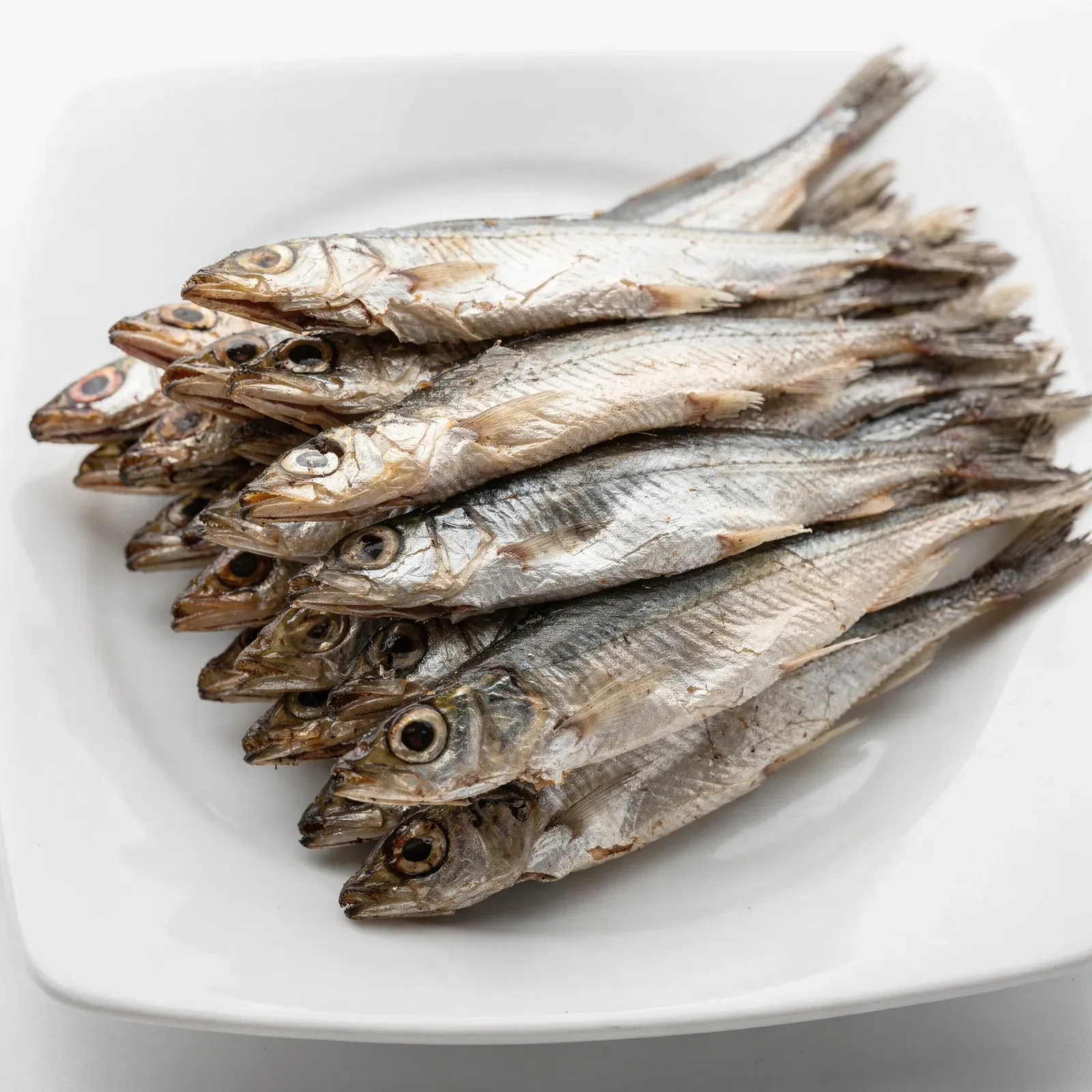
- Dashi ingredient
- 煮干し
Niboshi
Power over finesse, and pull off the heads.
Flavor profile
The strengths are editorial judgments on a scale within the family, not measurements. They can be compared across the dashi ingredients varieties, not directly against another family.
Niboshi are small fish, most often Japanese anchovy, that have been boiled and then dried whole. They give a stronger, fuller and considerably less elegant broth than katsuobushi: darker in color, distinctly fishy, and carrying a bitterness that comes from the head and the innards. That is exactly why those parts are picked off before steeping, and exactly why niboshi is the standard in everyday miso soup and in plenty of ramen, where power beats finesse.
Sensory analysis
Pyramid and character
Aroma
from the bag
- dried fish
- ocean
- stale edge
Broth
in the spoon
- powerful umami
- saltiness
- fishiness
Finish
what lingers
- long
- hearty
- slightly bitter
Character 0-100 per axis, set relative to the other entries in the same family. An editorial judgment of a typical serving, not measurements.
Background
Facts
- Raw material
- most often Japanese anchovy; sardine, small fish of the herring family and sand lance also appear
- Processing
- boiled whole and then dried; the name means roughly boiled and dried
- Names
- called niboshi in Kanto and iriko in Kansai, but it is the same product
- Flavor core
- inosinate 350 to 800 mg per 100 g, glutamate 40 to 50 mg (Umami Information Center)
- Bitterness
- the head and the innards carry the bitterness and the stale note, and are removed before steeping
- Use
- everyday miso soup, noodle broth and ramen
In the pot
Broth
- Soaking
- 20 to 30 minutes in cold water, preferably overnight in the refrigerator
- Method
- heat slowly, skim the surface and hold just below the boiling point for 8 to 10 minutes; cold-brewed, the broth turns out clearer and milder
- Note
- snap off the head and pull out the black innards first, or you will not need to ask why the broth tastes bitter
Keep exploring
Related in the Zukan
- Dashi ingredientsFamily
- DashiConcept
- KatsuobushiDashi ingredient
- KombuSea vegetable
Evidence
Sources
- Niboshi (Wikipedia) (retrieved 2026-08-12)
- Niboshi, Iriko / Dried Sardine (Kikkoman) (retrieved 2026-08-12)
- Seafood (Umami Information Center), tabell över umamiämnen (retrieved 2026-08-12)
Compiled by Basim Ali Yoshiguchi. .